
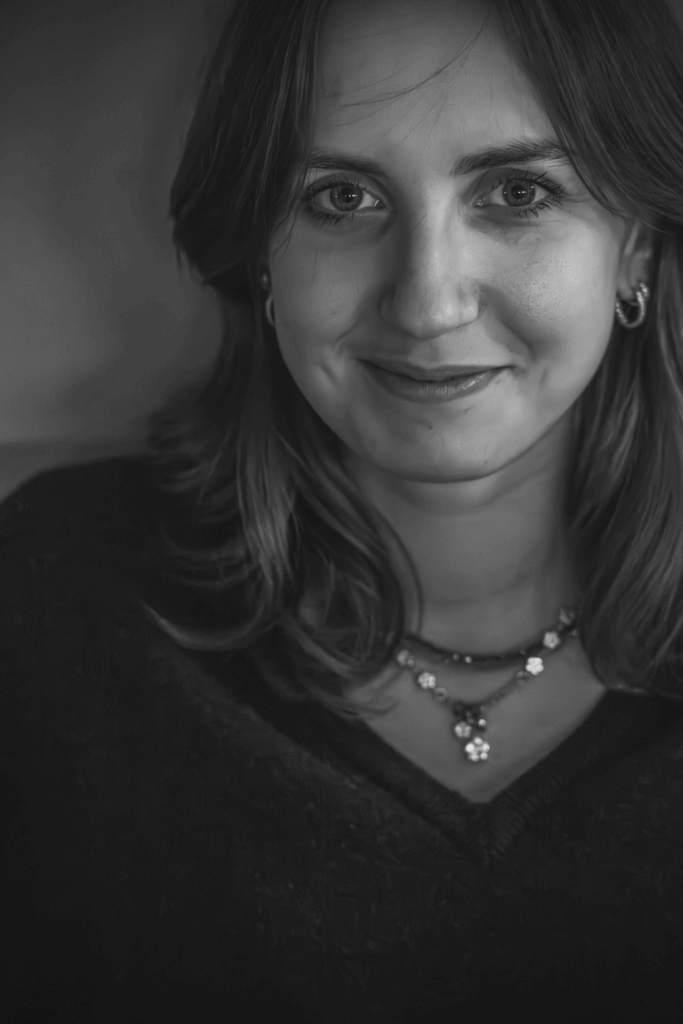
Francesca Dimina
Francesca Dimina was born in the year 2000 in Turin, and grew up with her mother and sister in the Turin’s countryside until the age of 13, when they moved to an apartment in the city. Throughout her years in the countryside, Francesca never stopped drawing. She sketched animals, people, landscapes, and objects. Often, she would also cut out fashion magazines—first sketching clothing on paper and then pasting in cutouts of the models’ bodies, designing her own clothes.
Having been bullied for her creativity as a kid, Francesca stopped drawing during adolescence. Still, she continued to express her artistic talent in other forms: personalizing her school diaries and books with drawings, sketching during class, and covering the walls of her bedroom with cutouts—filling her room with colors, photos, flyers, concert tickets, articles, etc.
During her university years, in 2020, she transformed her new room again into a sort of museum of colorful lights, posters, photos, University notes, or flyers. Yet, during this period she also began repressing her creativity, which remained locked inside until 2025.
In 2025, her creative spirit finally burst open when she received a palette and acrylic paints as a birthday gift. This present unleashed an explosion of energy, leading Francesca to create hundreds of works—first with acrylic paint, and later with oil pastels. This latter medium, being easy to carry, allowed her to draw at any time and in any place: in cafés, parks, waiting rooms, on trains, planes, buses, etc.
After opening a social media page, figures from the art world—or simply with a passion for art—began following her, and within just the last two months (out of her first seven months of painting and drawing), Francesca was invited to participate in four exhibitions: three in Turin and one in Milan.
The art movement
Francesca’s works blend the charismatic colors and iconic symbols of the Pop Art movement with the introspection and material strokes of Expressionism, creating a sort of “new” Fauvism. In her pieces, we see at the same time a clear reality, yet, distorted by the lines and altered in its colors. This tecnique draws us into the artist’s reality, as though we were looking through her eyes—perceiving both the lived reality and the emotions she is experiencing in that moment.
When a work, instead, is rendered in natural and realistic colors, the artist is calm, impartial, and remains observant of the surrounding world.
This message and style might also be compared to the poetic realism of 1920s French cinema, where the viewer does not only witness the movie character’s reality, but also senses their emotions in that moment.